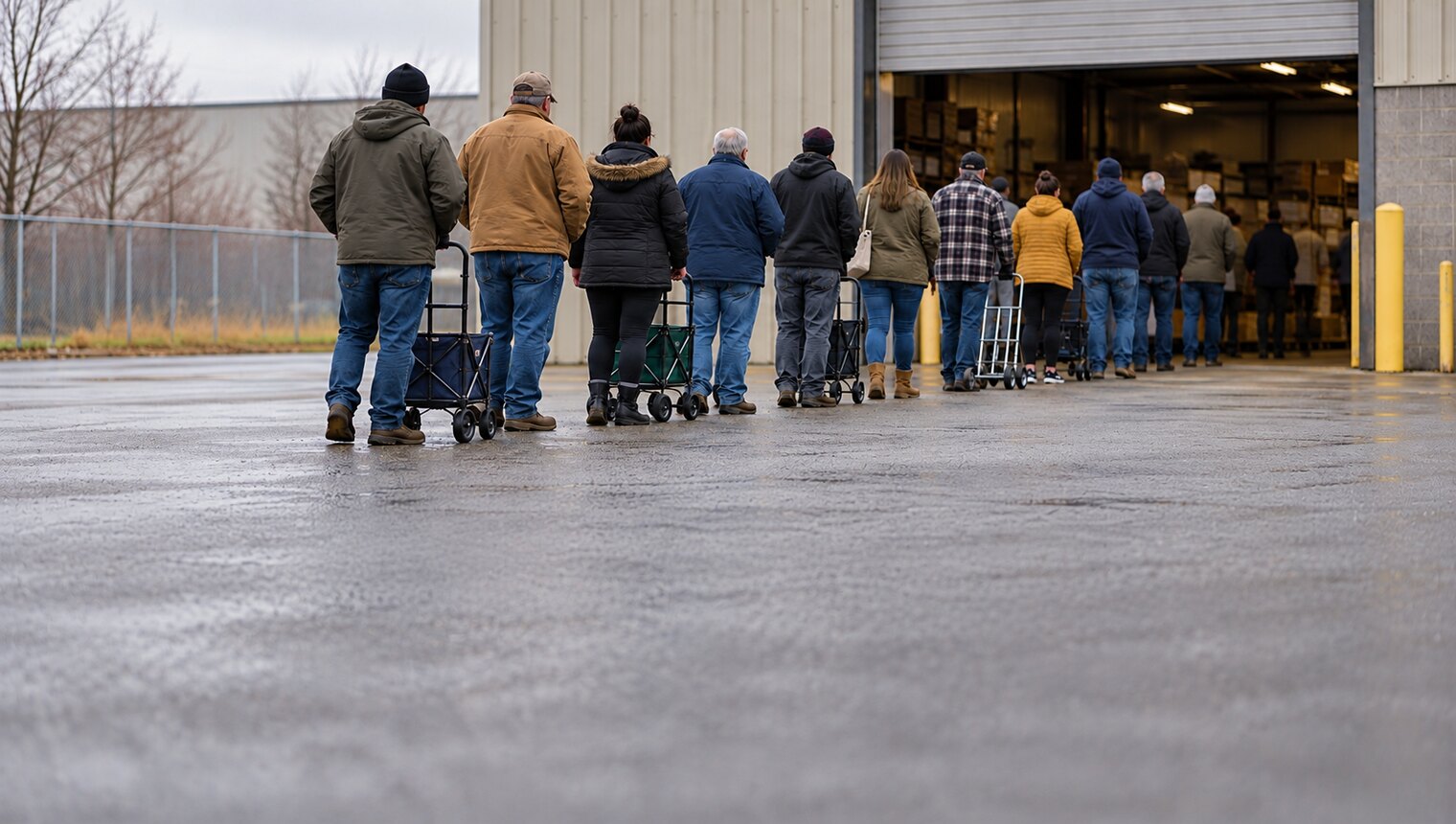
If you buy returns and overstock, you will run into three formats. You can dig through a bin store, bid in an online auction, or buy at a fixed price. Most people settle on one without comparing them. We sell at fixed prices, so we have an interest here, and we will say where fixed price is the worse choice as well as where it is the better one.
The bin store
A bin store puts mixed goods in large bins and sells them by the item, often at a price that is flat for the day or that drops as the week goes on. You walk in, dig, and carry out what you find.
- What you get. The item in your hands, so you can turn it over, check the box and count the parts before you pay.
- What it costs you. Time and a trip. Sorting through a bin takes patience, and the best items go to the people who arrive first.
- What you cannot know. Whether it works, unless the store lets you test it. Many sell as-is.
- Best for. People who live close, enjoy the search, and want to judge an item with their own eyes.
The online auction
An online auction lists a lot, often a single item or a pallet, and lets people bid until a closing time. The price goes where the bidders take it.
- What you get. A chance at a very low price when few people are watching.
- What it costs you. Attention. You follow a clock, and you may lose several auctions for every one you win. Some auctions add fees on top of the winning bid, so check what the final invoice includes before you bid.
- What you cannot know. What the winning price will be, and often the condition, beyond a manifest and a stock photo.
- Best for. People who like the contest, can watch a closing time, and are buying in volume, such as a reseller who needs a whole pallet.
The fixed-price shop
A fixed-price shop lists each item at a price and sells it to whoever buys it first. There is nothing to win and nothing to wait for. This is how we sell. We open every box, photograph the actual unit and score it on four facets, which are cosmetic, function, completeness and packaging. You can read the scores before you pay, and the page on how we rate condition explains each one.
- What you get. A price you can see, photos of the exact unit and a written condition report. Orders ship to your door.
- What it costs you. The chance of a steal. A fixed price is a fair price, not a lucky one, so you will not get a unit for a dollar because nobody else was looking.
- What you cannot know. What it feels like in your hands. You are relying on the photos and the report, and that is why the report exists. A unit that does not match its report can be returned within 3 days of delivery.
- Best for. People who want one thing, want to know the price now, and would rather read the condition than guess it.
Side by side
| Comparison | Bin store or auction | Fixed price |
|---|---|---|
| How you learn the price | In the bin, the tag or the day’s rate. In an auction, when the bidding ends. | On the listing, before you do anything else. |
| How you learn the condition | By inspecting it yourself at a bin store. In an auction, usually from a manifest and a stock photo. | From photos of the exact unit and a written report. |
| Where your time goes | Digging through the bin, or following a closing clock. | Reading the report. |
| How you get it home | Usually you collect it. | It ships to your door. |
How to choose
The honest answer is that it depends on what you are doing and how you value your time. A few rules of thumb:
- You want to hold it first. Go to the bin store. Nothing replaces your own hands on the item.
- You are buying a pallet to resell. The auction suits you. You can take on the risk of mixed contents, and you have a way to move the goods.
- You need one specific thing. Fixed price is usually quickest, because you can find it, read its condition and buy it in the same sitting.
- You cannot easily travel. Fixed price, since delivery is part of the deal.
- You enjoy the hunt. A bin store or an auction is part of the fun, and nothing we say should talk you out of it.
You can also mix them. Many people use a bin store for the things they want to touch and a fixed-price shop for things they have already decided on.
What to check, whichever you pick
- The total, not just the price. Look for fees, tax, and shipping or the cost of a trip.
- The return terms. Some places sell everything as-is.
- What the description actually says about condition, and whether it is specific to the unit in front of you.
- Whether the item has been tested, and if not, whether the seller says so.
For us, shipping is one charge for the whole order, free over $199, and we state whether a unit has been tested or not. The shop is open if you want to see what that looks like.